Saturday, April 29, 2006

Girl in Hyanciah Blue - Susan Vreeland [May/06]


This is a reread for me, a very rare thing because I have so many books that I want to read I never feel like I can go back and read old ones. As the back of the book states:

A professor invites a colleague from the art department to his home to see a painting that he has kept secret for decades. The professor swears it is a Vermeer - why has he hidden this important work for so long? The reasons unfold in a series of stories that trace ownership of the painting back to World War II and Amsterdam, and still further back to the moment of the work's inspiration. As the painting moves through each owner's hands, what was long hidden quietly sufaces, illuminating poignant moments human lives. Vreeland's characters remind us, through their love of the mysterious painting, how beauty transforms and why we reach for it, what lasts, and what in our lives is singular and unforgettable.

The novel could be looked at as a collection of short stories with the painting being the central theme that combines them. The first chapter focuses on the painting, sets it up for us and tells us about the girl that Vermeer supposedly was meant to paint. It is also explains one man's obsession and how his father came to acquire the painting that would be their lives.

The second chapter relates to the painting, with a little girl named Hannah falling in love with it. The difference is that while there are impressions made by the girl and explanations as to how she acquired it, other things are central to the chapter. It is just simply the painting looking down on the events of a Jewish household during World War II. And one girls struggle to come to terms with the life her family finds themself in when all that they know has been changed and taken away from them.

In chapter three, the painting represents a lost love and a gift for young couple and their new future together.

Chapter four is about a scandal that comes to play when a woman falls in love with someone that is not her husband but a musician and what happens in front of the painting of the young, innocent girl in the painting.

Chapter five is about a woman and her family trapped after a massive flood. One night the painting comes to her with another special gift and the woman has to chose what is more important to her.

Chapter six is about a young woman that is very superstituous, a fact that costs her her life. Her only pleasure is the painting of the young girl over who she cries because the woman in the painting has what she wants: innocence.

Chapter seven is about the man that would paint the painting that was the basis to the entire novel.

Chapter eight reveals who the young woman in the painting is and also how the painting began its travels through the times.

All in all, as good a read the second time as the first time. You get brief glimpses into all of these lives, but they are worth it.

4/5

Something Borrowed - Emily Griffin [May/06]

I must admit, this is not a book that I would normally read, but for one it came up on my Amazon recommendations all the time and for another my friend was willing to lend it to me, so I decided to give it a try. When I first started the book, I was a little bored by the premise. I mean, it is actually a pretty predictible novel, if one must be honest. As the back of the book states:

Meet Rachel White, a young attorney living and working in Manhattan. Rachel has always been
the cosummate good girl - until her thirtieth birthday, when her best friend Darcy throws her a party. That night, after too many drinks, Rachel ends up in bed with Darcy's fiance. Although she wakes up determined to put the one-night fling behind her, Rachel is horrified to discover
that she has genuine feelings for the one guy she should run from. In her wildest dreams (or worst nightmare?) this is the last thing on earth Rachel could ever have imagined
happening. As the September wedding date nears, Rachel knows she has to make a choice. In doing so, she discovers that the lines between right and wrong can be blurry, endings
aren't always neat, and sometimes you have to risk all to win true happiness. S0mething Borrowed is a phenomneal debut novel that will have you laughing, crying, and calling your
best friend.

Okay, so what more can one say about the novel? We have Rachel, the perfectionist that works her heart out to get ahead in the world. She does the things that she feels are expected of her, and would never do something underhanded or wrong. Then we have Darcy, that person in school that everyone loved, the one that did not have to do anything to get ahead in the world. Rachel has always lived in Darcy's shadow, she has felt that Darcy deserves the good things from life, while she should live with the lesser things. This novel may be a romance novel, but at the same time it is about the battle between the popular crowd and the girl that always hid in the shadows. When Rachel begins to understand that she is worth something, that Darcy is not any better than she is, I was cheering for her! It may take something underhanded to get Rachel to claim her own life, but she does it. She tries to continue to play the "good girl" role, but I have to say, even when she understands that she likes him as more than just a fling, you feel good for her. It was totally a novel about the good overcoming the evil, in other words, Rachel actually standing up for what she wants, not what Darcy should have.

All in all, not a bad novel. Predictable, yes, but it was not really about the predictibility, it was about a woman coming to terms with herself and what she wants out of her life.

3.5/5

Friday, April 21, 2006

Year of Wonders - Geraldine Brooks [April/06]


One day while I was browsing the second hand bookstore, I came across this novel by Geraldine Brooks. I had never read a book about the plague that struck London and other areas, so I decided to pick it up. It took her newest novel, March, winning the Pulitizer Prize to attract me to picking this book up and actually reading it.

This novel is not set in London, it is set in a town outside of it. The plague reaches them from a bolt of cloth that was sent to the village from London. The main character in the novel is Anna Frith. When the novel begins, the plague has already struck the village and Anna is standing at the end as a survivor. Not many were so lucky, as we watch her recount the year 1666, we learn that 140 people perished from the plague. This might seem like a large number considering the amount that died elsewhere, but when a town only has a couple hundred people to begin with, this makes a lot of difference. Only a couple people struck down with the plague will survive.

Anna Firth, a housemaid, had just suffered a loss prior to the plague year. Her husband, Sam, was killed in a mine while digging for ore. His body was destroyed and she was left to raise two small children on her own: Tom and Jamie. To help her out she took on a job as a housemaid at the rectory where she meets Elinor and the rector, Mr. Mompellion. It is with these two that she emerges as a heroine and healer for her town. No one knows what to make of the plague, and when the ideas of great doctors result in no immediate cure, Elinor and Anna turn to nature as a means of survival for the people that they see every day. They had previously had midwives and healers, but in their time of fear the town called them witches and blamed them for the destruction that had been set down on their village. They did not even have to repent as the plague struck most of them down anyways as a sort of deserved punishment.

With no other hope, Elinor and Anna become the town healers. They researched the healing qualities of the plants and herbs of the village in the hope that they would stumble on a cure. In the meantime, in an attempt to prevent the plague from spreading to other areas, the Rector suggests that the town cut themselves off from other towns until they are sure the plague has run its course. The town is not easily swayed by this idea, but the rector can be persuasive and they find themselves shut off from all other members of the outside world. The rector also moves his church services to the outside in a hope that distance between his church members would aid in preventing further outbreaks.

Everyone struggles through lose, Anna loses her two small children quite quickly and it is because she has lost her children to care for that she is forced to suffer through and find a new meaning in her life. Whole families are erradicated, families that have lived in the area for centuries. Fights are fought over ownership of land when children are left to tend their family homes. And, quick fixes are seeked, with someone claiming to be the dead midwife and selling "cures" to the villagers. There are also those that turn to darker forms of salvation that are haunting in their descriptions and fearful to think of.

Whatever the hardships that strike this town, because people die from hatred, not just the plague, Brooks does a great job in conveying the message of the struggle but at the same time it is not a depressing novel. There is life in it, even with simple moments of a birthing of a lamb. At the end of the novel, Anna helps the richest family in the community, the family that ran when they had the chance. She finds herself with a new life to live after this encounter, and it is life-filled ending to a deathly novel. The ending may bother some people, though, I warn you depending on what your expectations are.

4/5

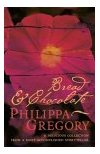
Bread and Chocolate - Philippa Gregory [April/06]


I was a little iffy to read this collection of short stories by Philippa Gregory. Back when I bought it in January I had read The Constant Princess and The Other Boelyn Girl and liked both of them, but since then I have read The Queen's Fool and part of Wideacre. Was not a big fan of either. This left me wondering which category Bread and Chocolate would fall in to. It turned out to be a worthwhile read, with all the stories having a theme of disasterly lifestyles to them in some capacity. Someone else noted that there was only one short story in the collection that took place in the past, and that is surprising considering that Gregory is predominately a historial writer. You have to wonder what was going on when she wrote these short stories, a divorce or something tragic, becuase most of the characters in this collection are women unhappy with something in their life and fighting for what they want.

The Stories include:

"Bread and Chocolate" - About a monk who is offered a chance to be a television chef and meets a television chef regular who tempts him with chocolate cake....

"Coo-eee" - About a cruise guest lecturer who on one of his voyages meets a Yorkshire woman that is larger than life and leaves quite an impression on all that meet her... including the lecturer.

"The Favour" - This is the short story set in a historical setting. A young woman rejects her young lover and then is left with the consequences when he is fatally injured in a jousting competition.

"Theories About Men" - This woman thinks she has men all figured out, so when she finds out that her husband has been having an affair after many years of marriage she gets to put her theories to the test.

"Lady Emily's Swim" - An angry, bitter woman at the end of her life gets the chance to swim 20 laps a day as a gift from her daughter and the reader is left shocked by what goes through her mind while doing so.

"The If Game" - A story about a man who plays the "if" game with a colleague at work, but he is stuck in the "if" game and can never seem to think about the now, only about the "if".

"The Conjuring Trick" - A couple are living the dream, they have everything they want, but then the economy changes and they are left conjuring up a fantastic story to get money to buy off their extreme debts. See what happens to them as a result.

"The Wave Machine" - This is my favourite story in the book. It is about a little girl who is sent to live with her uncle while her mother pilots her father to daily doctor appointments. She has always lived in the city and so spends the summer looking for the Wave Machine that powers the ocean and making an impact on her Uncle's life.

"The Magic Box" - I think I had read this story before, but it is about a young woman faced with a unfaithful husband after she has already given up so much. Then she finds an old-fashioned camera and the reader sees the magic come alive...

"The Garden" - A woman who has a controlling husband, one that even attempts to control nature, gets revenge for his wrongs.

"The Last Swan" - A tale about young girls that join a national synchronized swimming team and one girl that defies a young man that thinks he knows everything.

"The Bimbo" - A bimbo comes to work for a London law firm, but by the end of the story she might be smarter than she looks.

"Going Down River" - A man with all his learnings goes to live with an undocumented tribe and write his thesis. The reader soon learns that he might not know everything.

"The Other Woman" - A woman finds out that her husband is cheating and decides she needs to learn about this other woman which results in her getting closer than she originally planned.

"The Visitor" - A couple who want everything perfect receive an unexpected visitor for the holidays who shakes their life up.

"Catching the Bus" - A woman has saved to one day make a better life for one of her children, this is her moment.

This was an interesting collection of short stories and an enjoyable read for the most part. Good to see that it is possible to like some of Gregory's work again.

3.5/5

England, England - Julian Barnes [April/06]

From Amazon.ca:

Imagine being able to visit England--all of England--in a single weekend. Big Ben, the Houses of Parliament, Stonehenge and Hadrian's Wall, Harrods, Manchester United Football Club, the Tower of London, and even the Royal Family all within easy distance of the each other, accessible, and, best of all, each one living up to an idealized version of itself. This fantasy Britain is the very real (and some would say very cynical) vision of Sir Jack Pitman, a monumentally egomaniacal mogul with a more than passing resemblance to modern-day buccaneers Sir Rupert Murdoch or Robert Maxwell: "'We are not talking theme park,' he began. 'We are not talking heritage centre. We are not talking Disneyland, World's Fair, Festival of Britain, Legoland or Parc Asterix.'" No indeed; Sir Jack proposes nothing less than to offer "the thing itself," a re-creation of everything that adds up to England in the hearts and minds of tourists looking for an "authentic" experience. But where to locate such an enterprise? As Sir Jack points out,

England, as the mighty William and many others have observed, is an island. Therefore, if we are serious, if we are seeking to offer the thing itself, we in turn must go in search of a precious whatsit set in a silver doodah.

Soon the perfect whatsit is found: the Isle of Wight; and a small army of Sir Jack's forces are sent to lay siege to it. Swept up in the mayhem are Martha Cochrane, a thirtysomething consultant teetering on the verge of embittered middle age, and Paul Harrison, a younger man looking for an anchor in the world. The two first find each other, then trip over a skeleton in Sir Jack's closet that might prove useful to their careers but disastrous to their relationship. In the course of constructing this mad package-tour dystopia, Julian Barnes has a terrific time skewering postmodernism, the British, the press, the government, celebrity, and big business. At the same time his very funny novel offers a provocative meditation on the nature of identity, both individual and national, as the lines between the replica and the thing itself begin to blur. Readers of Barnes have learned to expect the unexpected, and once again he more than lives up to the promise in England, England. But then, that was only to be expected.

Tuesday, April 18, 2006

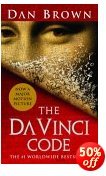
The Da Vinci Code - Dan Brown [April/06]


I had held off readng The Da Vinci Code for quite some time, but decided that it was about time that I see what all the buzz was about. It was quite worth it as I enjoyed the novel immensely. I do not read many thrillers, mainly only books by James Rollins, but once in a while I will add a new book to the pile. It is hard to write a review of The Da Vinci Code because while at its core it is just a thriller, I found the messages that it carried about religion fascinating.

The novel centers around two characters, Robert Langdon and Sophie Neveau. Langdon has been blamed for the murder of Neveau's grandfather, a museum curator and Da Vinci fanatic. He was supposed to meet the man for drinks, but he never showed up, but his name was still in the date book and his manuscript for his new book on the deceased desk. This begins a fight to stay away from the police as Langdon and Neveau come to terms with her grandfather's dying treasure hunt. A man that loved puzzles, he leaves behind one that will eventually lead Neveau to the greatest treaure of all.

The novel is quite interesting in terms of how it questions religion. It makes Jesus just a simple man who was the voice of the Gods, he had no powers of his own. Shocking more so is that he was married to Mary Magdalene, who religion buffs will know was considered a prostitue for her times. Brown's novel is really a celebration of the female form that has been left out of modern day religion. Langdon and Neveau learn that there once was a female side to the story and that Mary Magdalene was supposed to carry on the message when Jesus died, but jealous men made sure that would not happen and fed a story to the world so that she would never be trusted.

Even if the information covered in Brown's novel is incorrect, it is powerful to read a book where a male author looks so kindly on women. It would make so much sense to me that there was a female side to religion, but that is just how I see it. Regardless of what the reader thinks, this is a page turner with you wondering what clue will be revealled next. They are racing to keep the knowledge to themselves against the church who wish for the secret of the Holy Grail to be destroyed forever. I especially like the way that Brown looks at Da Vinci paintings because he points out things that have been overlooked or read another way. Even if it is not the truth, he did a wonderful job in making the story fit the information provided.

4.5/5

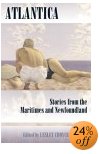
Atlantica: Stories from the Maritimes and Newfoundland - Edited by Lesley Choyce [April/06]


This is the second time I read this collection of short stories. The first time was for my own enjoyment because they were from celebrated Maritime authors and edited by one of my favourite authors: Lesley Choyce. This time I read them for one of my classes in university. The book is very enjoyable with the majority of the stories being quite entertaining. A great way to find out about life in the Maritimes. The stories include:

"Clearances" - Alistair MacLeod - One of Canada's most renowned short story authors. In this story we witness a man who is at the end of his life looking back on his past and fighting the changes that are coming with the future.

"The Train Family" - Joan Clark - A story about a young woman's imaginary family that kept her entertained.

"The Boot" - Wayne Johnston - A story about life in Newfoundland by one of Newfoundland's most famous authors.

"The Tarot Reader" - Carol Bruneau - A visit to a Tarot reader leads up to a big change in a family that always seems to be on the go.

"Homarus Americanus" - Maureen Hull - A city girl gets a lesson in the simple life.

"Missing Notes" - David Helwig - A story about the regrets a man faces.

"The Party" - Herb Curtis - An older woman's faith in mankind is shown.

That is just some of them, there is also:
"Dreaming Snow" - Anne Simpson
"Batter my Heart" - Lynn Coady
"Grieving Nan" - Donna Morrissey - would later become the inspiration for her novel, "Kit's Law"
"The Coinciding of Sosnowiec, UpperSilesia, Poland, 1942, and Banff, Alberta, Canada, 1990" - J.J. Steinfeld
"Mr. Manuel Jenkins" - Budge Wilson
from "The Afterlife of George Cartwright" - John Steffler
"One Saturday" - Helen Porter
"Heavy Ice" - Wayne Curtis
"Dance the Rocks Ashore" - Lesley Choyce
"Poems in a Cold Climate" - Bernice Morgan
from "The Bay of Love and Sorrows" - David Adams Richards
"Act of God" - Joan Baxter
"The Glace Bay Miner's Museum" - Sheldon Currie

This is simply a great way to get acquainted with literature from the Maritimes and Newfoundland. I particualarly liked it the first time because if I liked one of the stories I would look for the novels of these writers. It was a great way to encounter new authors.

4/5

Three Weeks with my Brother - Nicholas Sparks [April/06]


This is a novel that I wanted to read for a while, but for some reason it was hard to come by. My friend, who also reads Sparks, saw it at the store the other day and called to see if I wanted a copy too. Now, I have read it. I think the best way to tell what happens in this book is to quote the back:

In January 2003, Nicholas Sparks and his brother, Micah, set off on
a three-week trip around the globe. It was to mark a milestone in
their lives, for at thirty-seven and thirty-eight respectively, they were
now the only surviving members of their family. Against the backdrop
of the wonders of the world and often overtaken by their feelings,
daredevil Mica and the more serious, introspective Nicholas recalled
their rambunctious childhood adventures and the tragedies that
tested their faith. And in the process, they discovered startling
truths about loss, love, and hope.

Narrated with irrepressible humour and rare candor, and including
personal photos, THREE WEEKS WITH MY BROTHER reminds
us to embrace life with all it uncertainties... and most of all, to
cherish the joyful times, both small and momentous, and the
wonderful people who make them possible.

What better way to sum the book up than that? I really enjoyed reading it, and it took me little to no time to do so. It is always interesting to see where the author was coming from. He even explains how these life experiences influenced his novels.

4.5/5

Friday, April 07, 2006

Forever Amber - Kathleen Winsor [April/06]

I seem to have missed reviewing this book, so I will just post what it says about it from amazon because I can hardly remember the book (not one of my favourite reads):

Abandoned pregnant and penniless on the teeming streets of London, 16-year-old Amber St. Clare manages, by using her wits, beauty, and courage, to climb to the highest position a woman could achieve in Restoration England-that of favorite mistress of the Merry Monarch, Charles II. From whores and highwaymen to courtiers and noblemen, from events such as the Great Plague and the Fire of London to the intimate passions of ordinary-and extraordinary-men and women, Amber experiences it all. But throughout her trials and escapades, she remains, in her heart, true to the one man she really loves, the one man she can never have. Frequently compared to Gone with the Wind, Forever Amber is the other great historical romance, outselling every other American novel of the 1940s-despite being banned in Boston for its sheer sexiness. A book to read and reread, this edition brings back to print an unforgettable romance and a timeless masterpiece.

3/5

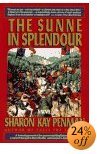
The Sunne in Splendour - Sharon K. Penman [April/06]


This is by far the best book I have read so far this year! It was Sharon Penman's very first novel, which is shocking considering how well-written it is. I had been planning to read a Penman novel for quite some time, but this month was the first time that I felt I had the time for such an undertaking. At over 900 pages, it was one of the longer books I had attempted in recent memory, but very worth it. The novel is predominately about Richard III, the last-born son of the Duke of York. He is just young when his father goes to war against the House of Lancaster in an attempt to reclaim the throne for the Plantegenet's and from there it spans 33 years of Richard's life showing the lives and deaths of the people that surround him.

This was the first time I had read anything on the Plantegenet family. I had heard of the War of the Roses, what the power struggle was known as at the time, but it was not a period I had given my studies to. With the death of his father in this early battle, the fight for the kingdom has been laid in the hands of Richard's charismatic older brother, Edward. When Edward was just nineteen he defeated the House of Lancaster and became England's new king. Edward is covered quite extensively in this novel as he is in power for many of the 33 years the book covers. He is quite a character, though, with his love of all that is wonderful and by the church, sinful, but he is also a man that his brother has looked up to for most of his life. While the sins of Edward come to play in the fall of the house of York, he made England a great country for many years and went to his early grave undefeated.

Another character that plays a large role in this novel is Anne Neville. She was the daughter of Edward and Richard's cousin, and because he came to side with the enemy, she was denied to Richard for many years. Their love for each other was stronger than the times, though, and while it would come to add to the tragedy of Richard's fall to the Tudor's, it was one of my favourite aspects of the book. They had genuine caring for each other and in a time when it was common for a man to have mistresses, once Anne was offically his, he did not stray. A very compelling aspect in such a tumultuous time.

As my knowledge of Richard III is limited, I was surprised that on the back of the book it says that "Sharon Kay Penman redeems Richard III from his villianous role in history as the hulking, evil hunchback". He is by no means perfect, but I find it hard to believe people saw him this way. His only great crime seemed to be that he was a bad judge of a man's character, and trusted men more out of duty than because of any lasting trait of the man. This book will touch you in ways that you would never imagine. It shows the sights of battle, but also what life was like in 15th-century England. It is time for any lover of historical fiction to share in the joys of the rise of the house of York and to shed tears at the lose Richard to the Tudors and the last of the Plantagenet Kings.

When the Tudors gain so much interest in fiction, it is nice to hear about another side of the royal families. There are many characters in this book that you will learn to love and hate. It may be Richard's tale, but that does not mean that Penman does not give other characters their moment in the spotlight and the reader the oppurtunity to get to know them and eventually feel for them as Richard does. This book is an epic that will never die and should be a required reading for at least people that love history, if not all readers that love a quality story.

5/5

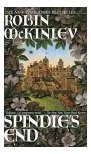
Spindle's End - Robin McKinley [March/06]


Spindle's End was one of the last novels I read in March, and I was much pleased with it. I really like novels that are fairy tale retellings, and this one retold the famous Sleeping Beauty story. Robin McKinley is an author I had been meaning to read for quite some time, so I was happy when I finally tracked down a novel by her.

I love some of the things that Robin McKinley does with this famous story. It is a similar beginning, with the King and Queen having a hard time having a child. It took fifteen years for the young princess to be born. Then, there was the evil fairy, the difference being that she had an argument with another Queen and decided to take it out on this princess. After all the fairies had presented their gifts to the young princess, she swoops in and proclaims the dreaded curse on the baby girl. That is where the similarieties with the original Sleeping Beauty pretty much end. Each town had been allowed to send one representative to the babies christening. One of these was Katriona, whose life changed because of that invitation. The baby was cursed, but a young fairy with very little powers saved her and brought her to live with her family until it was safe for the young princess.

One of the things I liked a lot was most people remember that when the fairies are giving out presents it is things like physical perfection and amazing skills. What McKinley did was give the child these skills, but she made her a tomboy of sorts who was little concerned with how she looked and any of the household skills that most women were expected to know. Besides, the physical attributes were perfect, but that did not automatically mean that the princess was the most beautiful in all the land. She just had nice things about her.

The story follows the life of the young princess and her adopted family in exile. No one knows where the princess is, they just know that the evil fairy does not have her yet. Spinning wheels had to remove their pointed pieces, and were replaced with spindle ends. These were figuartive carvings made to replace the points found on spinning wheel. One spindle end plays a very important part in the novel, though, and both of these things relate to where the novel gets its title. I think I like this version better than the original, actually, simply because the women in the novel are more than just figures to look at in attraction. It is a great novel for anyone that feels adults need fairy tales of their own. Not that the originals cannot be enjoyed by all ages.

4/5

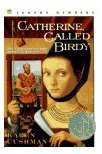
Catherine, Called Birdy - Karen Cushman [March/06]


I was at a store that sells very cheap books and came across this YA novel by Karen Cushman and decided to give it a try. I especially liked it for the saying on the front: "She's not your average damsel in distress...". Take that saying and couple it with the picture on the cover and you know that you are in for an entertaining read. It is also a Newbery Honor book, so other people enjoyed it as well.

It is a very simple premise behind this novel. It is about a young girl at her marriagable age who feels trapped by the time that she is living in. Her father is determined to have her married off and Catherine does not wish to be married to whatever man comes her way. Her father is just looking for a man of means so as to better influence the family and its funds. Catherine is not for this idea, though, and so she uses every trick in the book to send her would-be husbands back to whence they came without her hand in marriage. They generally go quite willingly when she is done with them.

Catherine might have met her match, though, when the ugliest and oldest of her would-be suitors comes to call. He is also the richest so far and the one that her father is the most determined for her to marry. Catherine is not a girl to wait around for whatever her father plans for her, she attempts to take matters into her own hands. She may have met her match with this one, though, as he is not as easy to remove as the others that she has encountered. Will she win out in the end? You will just have to read the book to see if she retains her winning streak. What you can know is that Catherine uses her diary to show us readers that she was a woman of her time, so whoever got her in the end was in for quite an experience.

3.5/5

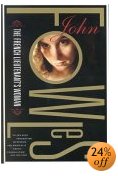
The French Lieutenant's Woman - John Fowles [March/06]


I read this book for one of my classes at university. It is a rather long novel, which is not always that bad, but it it also one of those books that you feel could have ended long before it actually does. John Fowles passed away last year, but during his lifetime wrote many novels that are loved by many and studied in classrooms around the world. The French Lieutenant's Woman is a highly researched novel in order to be able to better reward the reader with a sense of what life was like in Victorian England. An Englander himself, Fowles seemed to want to bring to his readers a sense of what his life was like several years before.

The novel starts out with a lovely new couple on the days leading to their marriage. Tina and Charles met at a party and after a courtship got engaged. Tina is the prized only child of a upper middle class family while Charles is a man that had decided that it is about time that he settled down. Tina is rather naive throughout the novel, you can tell she lived a rather sheltered life, while Charles spends the novel wishing for something other than he has and telling the readers that he is not ready for marriage. In the very early pages of the novel we are introduced to The French Lieutenant's Woman. A young woman, named Sarah, who was believed to have fallen in love with a young lieutenant and walked the docks awaiting his return. Charles' is the only one that she tells the truth, or what she says is the truth, to later in the novel.

This may seem confusing, what is Charles' doing with another woman, but their paths cross in the early pages of the novel and continue to. She finds in Charles' someone to express her sins to, and he finds in her his ticket out of a marriage that the reader knew was not meant to happen. Fowles follows this love triangle, we have Tina unaware that anything is going on until she is told, Sarah who seems to want something out of someone elses lover, and Charles' who seems to always want the one thing he can never have. Fowles also uses this novel to express to the reader what it was to be a gentleman in Victiorian England by having Charles have discussions with himself over the correct behaviour for a man in his situation and also by a narrator that offers his opinion of the novel at every oppurtunity.

This book is different than you might consider a romance novel. The narrator tells you what to think about the situation and instead of a clear chain of events, you are often left with choices as to how things should play out. It is an interesting novel, but not very engaging.

3/5

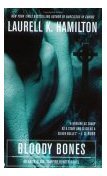
Bloody Bones - Laurell K. Hamilton [March/06]


After reading Guilty Pleasures by Laurell K. Hamilton, I found that I had to know what happened in the series next, so I went searching for the second novel. In my town, they only have the later ones in the series, but a store about an hour away appeared to have all of them. I used a book later in the series to figure out which book to get next and walked away with Bloody Bones. As I was reading it, though, I found that a lot of stuff seemed to have happened not recorded in a book, so I was a little confused as to where some of the characters had come from and others gone to. Turns out this is like book 5 in the series and the book I was using to find out the order was wrong. I have book 2, The Laughing Corpse, now in my to read pile. I hope to get to it soon because now I need to know all that I missed.

Anyways, in case people have forgotten, Anita Blake is a vampire hunter and animator. She is good at both of her jobs and high in demand. This novel starts out, though, when she is even busier than originally she planned. She gets called in as an animator to raise an entire graveyard of two-hundred-year-old corpses who have been disturbed by a bulldozer and thus quite separated from their bodies. It is a hard job and Anita is not even sure if she can possibly do it. While arranging what she is going to do about this job, though, the police call her in to investigate what happened to three Missouri teenagers who have been slaughtered like Anita has never seen before.

In the blink of an eye, Anita has herself in the middle of a very powerful battle that most people are not even aware of. She is forced to ask help of the local vampire leader which causes more headache for her than it seems worth. This novel also has fairies in it, which I liked because I am fond of fairies almost as much as vampires. Hamilton has another series centred around fairies, actually, but I have as of yet not read it. This is another very exciting novel and the sexuality that I have been warned about is still not over-whelming in this particualar novel, so that was good. I really like this series, I don't think it will be long before I read the other one I have from it. Then, I think I might check out the fairy series.

4/5

Dry Lips Oughta Move to Kapukasing - [March/06]

This is another play that I attempted to read over the last couple months. It was written by a Canadian, actually, and deals with Native rights as the main issue of the story. The play takes place at a fictional Native reserve in Canada. There are many characters to the play, but only one female role, the rest of the characters are men. One of the main things that happens in the play is that the women of the reserve decide that they want to play ice hockey, Canada's favourite pasttime. All the men of the play are big hockey fanatics, and they attempt to be understanding to the women and their attempt to be different. The play also covers Native stereotypes, for example one of the children in the play has fetal alcohol syndrome because his mother drank. A past time that is stereotypically placed with all Natives. The author does not necessarily say that the stereotypes are true, he just shows what could happen if they were. The big theme to this play, though, is lose of identity. By watching the scenes play out, you see that these Natives quite similarly to white man. They have lost the things that made them individuals, and the author tries to bring them back. He shows that religion has either been adapted to meet the white mans views or has to be risque and dangerous to get noticed. One of the men in the play is obsessed with this lose of identity and during the course of the play brings back his native traditions in small quantities.

Overall, not a bad play, but I found it not as readable as others. It is probably much better if you get to see it first hand.

3.5/5

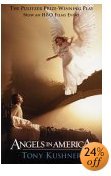
Angels in America - Tony Kushner [March/06]


Angels in America is one of the greatest plays ever performed on stage. It was something I was always aware of but never really paid the appropriate amount of attention to. When I read the play, though, I was quite entralled with it and hope to eventually get around to renting the mini-series that was later put out. The play covers so many issues that someone could go on for months about all the little details. It is a play about acceptance, gays, AIDs, politics, religion, forgiveness, family, love, friendship, relationships, mental illness, understanding, and the list goes on and on. It is a very profound play.

In the play, we follow main characters. One of the characters has AIDs, another is a famous lawyer dying of AIDs but claiming he had cancer, another is a gay man in a relationship with a woman, there is a gay man that has lost himself and cannot handle difficult situations, a woman that is not totally aware of the world around her, a mother coming to terms with the changing times, and many more characters. The first character I mentioned with AID's is one of the more central characters to the play. Many of the other characters in the play interact with him and then they interact with other people and draw them into the same sphere. He is living a bleak existence, his lover could not handle the AIDs and leaves him and he finds himself very much alone in the world. He has interactions with angels, though, that are some of the more phenomenal scenes in the play.

The man that has AIDs and is pretending he is dying of cancer is quite the character. He is based off a real person who was a famous lawyer but was not always shrewd about catching the guilty party. One such case comes back to haunt him through the play. He dies very painfully and at a time when his lawyers license was being reviewed and eventually taken away from him. He does at the bottom instead of at the top where he thought he spent so much of his life.

The man that is gay in a straight relationship does not really care to admit that he is gay. His wife has mental illnesses and is often high of valium, a common drug at the time in this play. She is trying to get her life together but it always seems like for every step she takes forward she takes two more back. She is having a hard time accepting her husbands new lifestyle.

All of these characters, and more, interact in an environment of not being accepted. They all have problems that were scorned during the 80's, when this play takes place, and are all trying to get by in a world that is so set against them. You don't have to read this play, but I suggest you watch the mini-series. It really does touch you in a way that you gain a new understanding.

4/5

Thieves and Kings Book 1 - Mark Oakley [March/06]


It is with great excitement that I write a review of this particular book, maybe because in the back of my mind I would love to get him more readers. You see, he started his career in Ontario, but moved to my town two years ago. I suppose we consider him one of our own now, even if he did start the comic many years before in a different town. Thieves and Kings is the first volume of the series. How do you tell it from others, simple, it's the Red Book. He has them distinguished by colours, not by titles, which is fun. Thieves and Kings is not like the rest of the books that I have covered in this blog because it is a graphic novel, not a play or fictional novel.

This particular book encompasses the first six issues of the series. It is in here that we meet some of the characters that will eventually be essential to the series. The main character is Rubel, a young thief that makes the acquaintance of the princess of his home and becomes her royal thief. After that, the comic jumps ahead and we meet Rubel when he is a little bit older, but still only a child on the brink of maturity. After meeting the princess in the first pages of the comic, she is never heard from again for the rest of the pages, and since I have not read any of the other issues yet, I do not know for sure when she does return. All we do know is that everything that Rubel does he declares in the name of the Princess.

In this particular issue, Rubel is joined by Varkias. Varkias is a little, well, creature, that is the only friend that Rubel has in the world. The world has been changing and with it his friends and relatives, so he quite quickly finds himself alone in the world.

The back of the collection quotes this, I think it will show what happens in the comic quite well and might catch future readers:

With the five red-faced guardsman unused to rooftops and unable to run as quickly as Rubel in any case, it began to look as though the boy might just get away. When this realization dawned upon him, Rubel's fright, which had become very tightly wound indeed, loosed all at once, turning into something ticklish and laughing and entirely unexpected.

"Ha Ha!" he turned and sang, "You can't catch me! You can't catch me! I am the princesses' thief, I am!"

And then he ran out of rooftops.

"Nice going," Varkias said, lighting on his shoulder, still clutching the rose meant for Katara. "I think you should have turned a different way a couple of houses back."

The five guardsman came puffing up behind him wearing expressions which were quite black.

Will Rubel live to see another adventure? Find out for yourself and pick up a copy of this series for yourself. It uses both drawing and the classic comic style, and is quite fun to read. Always good to buy a gift for your boyfriend that you can use yourself!

4/5

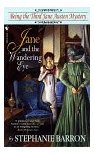
Jane and the Wandering Eye - Stephanie Barron [March/06]


Jane and the Wandering Eye is part of a mystery series by Stephanie Braddon that covers Jane Austen's life but imagines her as a detective. Jane and the Wandering Eye is the third book in the series, actually, but it was all the store had at the time and I wanted to see if I was going to like the series before searching out books 1 and 2. I am very picky about my mystery novels, I rarely ever like ones set in contemporary times and prefer ones with a historical background. I really enjoyed this novel, though, so I am glad I took the chance on it.

The novel takes place around the Christmas period of 1804 with the conclusion of the case occuring on Christmas Day. Jane is bored with the town that her parents have decided to take up residence in, Bath, and is looking for an adventure, presumabley a new case because by the time she was in this novel there had been two before it. Jane has a sort of lover in the novel, it is nothing formal but she is often seen with Lord Harold Trowbridge. In this novel, he is the reason that her adventures begin. The Lords niece, Lord Desdemona, has arrived in Bath so as to avoid the attentions of her suitor, Earl of Swithin. Jane is asked to keep an eye out for Desdemona and see if there is another man that has caused her to so hastily turn away from the Earl.

The novel takes a deadly turn, though, because while Jane is at a party at Desdemona's grandmothers, a man is stabbed to death. There is a man found standing over him that the police believe is the guilty party, but Jane and Lord Harold think otherwise and decide to take the law into their own hands. Specifically because the suspect is Lord Harold's nephew, Lady Desdemona's brother. I originially thought it would be strange to have a mystery series centred around Jane Austen, because obviously her life is well-documented and it makes you wonder how Braddon would choose to use the facts. Upon reading, though, I found that everything that happened did not overtly break with the times and never really showed Jane Austen any different than she would presumably be. The novel is written as if Jane Austen herself were writing in her diary and telling what adventures she had the day before. I think this style fits with the novel quite nicely.

I recommend this series quite adamently. You will feel like you are in 19th century England, an experience that you will enjoy immensely and then there is the case keeping you guessing who the guilty party is.

4/5

The first two novels in this series are:
Jane and the Unpleasentness at Scargrave Manor
Jane and the Man of the Cloth

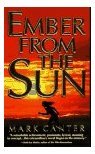
Ember from the Sun - Mark Canter [March/06]


I spend a lot of time in second hand bookstores, generally browsing the fantasy section. One day when I was in one of the stores a lady that works there came up to me with this book and suggested I read it. It took me a while to get to it, I was busy with classes at the time, but when I did I was well rewarded! Too bad the woman that suggested it to me hasn't been at the store when I have since.

It is a novel about a Native man from the North who goes home to visit his family after living in the United States for several years. While hunting with his father and sister and he comes across a body of a Neanderthal woman still in relatively perfect condition. This is where the story starts, as even though she is dead, this woman plays an important role in the novel. It is unclear how she has managed to stay in such perfect shape for all this time, but she does, and therefore becomes an important asset to scientific research. One night while the doctor is dreaming, though, a strange thought plants itself in his mind that there is more to this puzzle than meets the eye. You see, she's pregnant and the embryo is still intact. Suddenly, we have a scientist able to put a prehistoric baby into a modern surrogate mother.

It is the baby girl that comes from this that the story concentrates on. She has found herself alone in the world because while she is not aware that she is a Neanderthal woman, she has a golden texture to her skin, does not mind the cold, and her physical structure is unlike modern day women. For these reasons she knows from an early age that she is different from others, but she just can't seem to figure out why. She always assumed that there were more of her people elsewhere, it did not appear to her that she would be the only one. When she goes in search of her identity, though, the reader finds out something that will amaze them, but it is only fun if you discover it on your own.

One of the best books I have read in a long time! Really fit my historical ideas and really made you think about the past and the world as it was before.

5/5

Tuesday, April 04, 2006

Guilty Pleasures - Laurell K. Hamilton [March/06]


Well, of all the reading I had done up to this point, this was the most interesting discovery. I had been hearing about her on a few web sites, but never got around to reading her, then one day I happened to see a book by her at the second hand store and low and behold, it was book one. I had never really done the vampire novels before, so I was curious how it would play out. What happened was, I really liked this novel.

This is book one in Hamilton's "Anita Blake" series. Anita Blake is a vampire slayer and a neomancer. Not sure which came first, Buffy or Blake, but I was never much of a Buffy fan. Anyways, in the novels she deals a lot with dead people, so it is sort of interesting. She has some pretty amazing abilities and can do things that regular people can not dealing with vampires. The particularly good thing about book one is that this is not her beginning out in her career, by the time we are reading her, she has been in the business for I think 4 years, so she has connections and interesting experience which adds to the novel.

In this first book she has a meeting with the master of the city that she lives in. Someone is killing vampires and the master wants Anita to crack the case. This is a really old, really powerful, and really deadly vampire that Anita is dealing with, so it gets interesting. It is one of those novels that I would hate to have spoiled for me, because figuring things out is half the fun. I will tell you that there is a vampire that has a "thing" for her, which is sort of interesting because he is a vampire and she is practically a mortal. I say practically because well, strange things happen. She gains some powers from the lover boy and can actually stand nearly neck to neck with most vampires, just not all of them.

I have to admit, I was skeptical about these novels at first, even though people were telling me they were good. I really enjoyed reading this, though. Anita Blake is a action sort of gal and she really gets the job done! I hear that she gets sort of romancy in the later novels, but for the time being it is nice to read about a strong independant woman that knocks out the bad folk.

4.5/5

Monday, April 03, 2006

The Borgia Bride - Jeanne Kalogridis [March/06]


This is a novel that I had wanted for a very long time. I saw it at the store and something about it called to me, but it was still some time before I actually bought it. It was also one of the few times that I bought a book new. It is interesting that I bought it the same time as I bought Birth of Venus because they both cover the same time period in Italian history, just from different perspectives and The Borgia Bride seems to go farther into the future. In The Borgia Bride, the story is told from the perspective of Sancha of Aragon, daughter of the king of Aragon and his mistress. It starts from a time when she is very young and while it may not go into great detail, the reader knows for the most part up until she dies. It is her time while in the Borgia family that is of great importance to the novel.

The Borgia family, for those that do not know, is the popes family. At this particularly time, this particular Pope acknowledged his children and it is one of them that marries Sancha. The novel shows just how messy it was to be living in this household. There is Lucrezia, the Pope's daughter, who has had a very unhappy life. She has terrible luck with men and it seems that just when she gets happy, something happens to destroy it. When Sancha first comes to the house she does not like Lucrezia because she seems like a very spoiled girl that sours any relationships other people have with her family and thinks that what she wants she will always get. As Sancha learns more about Lucrezia, though, she begins to gain a respect for her that borders on friendship because there always seems to be a new problem that Lucrezia is in the middle of. It may not always be her fault, but it makes her look wrong because of it. I am interested in Lucrezia herself and actually bought two Jean Plaidy novels that speak of her life. I will be interested to see how Plaidy saw her life.

The Borgia Bride interweaves historical fact with fiction, so the characters included in the novel really did exist, and many of the things that happen in the novel really happened, but others are in dispute about their validity. Sancha had a terrible relationship with her father, he treated her terribly. It might be because he was scared of her because as we find out later in the novel, she was stronger than he was. The only person you really see Sancha care deeply about is her younger brother, and it is this relationship that people use to hurt her. Some very sad things happen in relation to her brother, which is unfortunate because he really did not do anything to deserve the treatment. He was a gentle, quiet person, he just ended up in the Borgia family by marrying Lucrezia.

This novel is not exactly for the weak of heart as there is incest in it, which is not everyone's cup of tea. I did not particularly like the incest, but you can have historical fact without the bad stuff, and I do not think it was done distastefully. This is a novel of a struggle of a young woman to find out where she belongs in this families vicious web and who she can trust. I do not regret paying full price for it.

4/5

Last Summer at Bluefish Cove - Jane Chambers [February/06]

I skipped over this when I was doing up this month, so I read it earlier in the month, but close enough. This was a play written by a female playwright. It is really a simple play, but it does have a few messages for its readers. At the beginning of the play we are introduced to a woman fishing at Bluefish Cove, a beach resort. She is just there, it is nothing special, but that is the opening scene. Another woman enters the scene, she has just terminated her marriage and was looking for somewhere, anywhere, to go. She just drove and Bluefish Cove is where she ended up. It is this brief interaction between these two women that shows just how different they are. For starters, the woman fishing is a lesbian, while the other woman is so naive she does not pick up on it. She is from an upper class and likely has lived a very sheltered life. She has never even had to work before. What she finds out by attending a Bluefish Cove party is that she is the only "straight" woman in the area, only lesbians rent out Bluefish Cove. She had been worried she would be out of place with all the women and men, but instead she was out of place in the fact that she did not know.

This play seems to be about informing. There is a stigma surrounding woman that have relations with the same sex and many people think of them as different. In the play, though, Chambers shows the woman as like anyone else. They have bad relationships, they cook, they drink, they fish, just a regular lifestyle. It would appear that Chambers is trying to say: "look at us, we are basically just like everyone else, we just have a different sexual preference". In the play you still see women hiding from who they really are. One of the women in the play is an author of feminist books and was previously a doctor. She is terrifed that someone might find out that she is a lesbian, and it takes her friend (the fisher) having cancer to slowly come to terms with who she really is. There are no actual male characters in the play, but they have a presence nonetheless. The men are the ones that took everything because their wife left them for another woman, one of the women in the play is even paying her lovers children's way through university because of the ex-husbands hurt pride. It is really a very interesting play with interesting characters and a message to others to not judge lesbians so harshly.

3.5/5

Sunday, April 02, 2006

Rockbound - Frank Parker - Day [February/06]


This novel is considered a classic in Canada. I had to read it for my Atlantic Canadian Literature class, and I thought I would like it, but I am sad to say I found it really dull! So dull, I am not really sure what I am going to say about it. It takes place on South Shore Nova Scotia, and actually when the author retired he moved to very near to where I was brought up. That is sort of interesting. Anyways, the book was written in the 19oo's and then vanished for a very long time, only to resurface in the last few years when another Canadian author nominated it for an award. It won, and the book has been around ever since.

I know that it is supposed to be a great work, and I know many people that have loved it, but I just found it monotonous with every other book set in the Maritimes. We are often associated with fishing, and fishing is what this book is about. It is really all the book is about, and I can generally handle that, so I wonder if my dislike of the book was based on the books I read around it. I mean, the book I read just before it was Good Omens, which I adored, so that would make a book about fishing look sort of dull in comparison. So, I intend to read it again when I read a more subdued book and maybe I will see what all the hype is about.

2.5/5

Good Omens - Terry Pratchett and Neil Gaiman [February/06]


What is there to say about this book other than: Terry Pratchett. He is such a brilliant author, I really need to read more of him! This was the fist time I had ever read Neil Gaiman, though, so I picked up a novel by him on his own to get a taste of him. I just have not read it yet. Anyways, this book, in true Pratchett fashion, takes the modern opinions held about the Apocolypse and flips them all around. It is hard to say exactly what he meant to do with this, but to my eyes it seems like they were trying to make fun of the Bible. Not because they are against religion, exactly, but because no one knows for sure exactly what will happen if the world were to end. The Bible was written many many years ago, so there has been a lot of changes since then. For example, there are supposed to be the Four Horseman of the Apocolypse. In Pratchett and Gaiman's novel, the horseman ride motorcycles. That is not exactly going against the Bible, it is just pointing out that horses are not as common anymore.

It is really is an eye-opening book, as it is actually both a novel and a true story, although not true at the same time. You see in the novel, there is a woman who writes a Bible of sorts that predicts the outcome of the world for many generations. She was considered a witch, and actually burned for this belief, but not before she created this book. In the novel, what she predicted comes to play. It is through a very distant granddaughter that we learn that what she thought actually was happening. She may not have had exact dates for when the events were going to take place, but this did not change the fact that she knew they were going to come into play. In some cases, she has it down to the details. Her family has spent generations translating her beliefs and more often than not the events are happening before they find the pertaining event in her book.

I just adore Pratchett because his novels are quite humourous, but at the same time they satirize society and aspects of the society in a way that Pratchett can get his beliefs about them across. This novel has so many in it that it would likely take several read throughs for one reader to get all of them. It may seem about the Apocolypse, but there are many other things at play in the novel. I will not list them here, I will leave you to find them out for yourself because this is a book I STRONGLY RECOMMEND!!!!!

4.5/5