Showing posts with label classic literature. Show all posts

Monday, January 16, 2012

Foundation by Isaac Asimov (Foundation Trilogy, Book 1) - A Group Discussion Part 2

One of the great masterworks of science fiction, the Foundation novels of Isaac Asimov are unsurpassed for their unique blend of nonstop action, daring ideas, and extensive world-building. The story of our future begins with the history of Foundation and its greatest psychohistorian: Hari Seldon.
For twelve thousand years the Galactic Empire has ruled supreme. Now it is dying. Only Hari Seldon, creator of the revolutionary science of psychohistory, can see into the future—a dark age of ignorance, barbarism, and warfare that will last thirty thousand years. To preserve knowledge and save mankind, Seldon gathers the best minds in the Empire—both scientists and scholars—and brings them toa bleak planet at the edge of the Galaxy to serve as a beacon of hope for future generations. He calls his sanctuary the Foundation.

But soon the fledgling Foundation finds itself at the mercy of corrupt warlords rising in the wake of the receding Empire. And mankind’s last best hope is faced with an agonizing choice: submit to the barbarians and live as slaves—or take a stand for freedom and risk total destruction.
This is the second-half, and thus conclusion, of the group read and discussion of Foundation by Isaac Asimov. I have wanted to read Asimov for years, but for whatever reason have never got around to his books before. I didn't even know what his books were about other than some guesses based solely on his titles. Foundation has been on my radar for a while, but this is my first time actually sitting down with the book. I am very glad I tend to join all of Carl's read-alongs because we usually have some similarities in our reading and I tend to read books that have been on my TBR pile for ages. I am looking forward to more from the Foundation Trilogy and more group reads as the year progresses. Now, on to the questions from the second-half of the book.

Salvador Hardin was the first character in the book that we got to spend any significant time with. What are your thoughts on the grande finale of his plotting, scheming and maneuvering to get the Foundation through to the next Seldon crisis?
I am glad that we were able to spend time with Salvador Hardin. When we first meet him he is still relatively young, but then the book jumps ahead a few years and we also get to see him when he is older. Asimov chooses to cut out all the unnecessary years in between, but will fill in details from that period if he thinks they are beneficial to the story. I have to admit that I am a bit of a leery of a system that lets people predict the future. I have never been a big fan of the idea that everything is planned out for us ahead of time. I much rather believe that there really is such thing as free-will. So, I have to admit that I have been second-guessing this book the entire time. I will be curious to see how things play out in the future books.

As to Salvador Hardin, he is doing everything in his power to keep the Foundation on the track that he believes was set out for him by Seldon. The thing is that he does not entirely know what that path is, so he has to guess what the best course of action is to get the results he believes in. So far things seem to be going to plan, but in the process Hardin has to be manipulative, sneaky, and in control of things. On the one hand, you can't help being appalled at the things he does to get the actions he desires. On the other hand, I couldn't help being impressed by how he works the system to get the result that he so desires. I am not sure if he is a good guy or a bad guy. He is just doing what he thinks is right even if it is not necessarily 'right'. Seldon did not lay out a path for them, but they are on a path nonetheless.

What are your thoughts on the way in which control/manipulation to achieve Foundation ends began to shift with The Traders?
In the first part of the book most of the focus on the political leaders and their systems. During the course of the second part of the book, though, we begin to see more of the 'common' folk make an appearance. The chapters that cover The Traders are very different than the ones that cover the leaders and it made for some interesting reading. First of all, those traders had some very cool items to trade. I wouldn't mind having some of them myself. Obviously they go about selling them in a sometimes underhanded manner and they don't always work like they promise they will, but still, interesting items.

This book has a strong religious background. The religious leaders have the control of the people and surpass the power of even though they believe themselves in power. This idea of religious superiority is one of the things that controls the people. Traders seem gifted at using the ideas of the people to gain what they want. It was good reading to watch them manipulate the situations to where they wanted them. The Traders really reminded me of Hans Solo from Star Wars, actually. I can see George Lucas reading these books and taking inspiration from them when he made the movies.

One of the interesting things about Seldon’s psychohistory is how much one man can actually affect it. In Foundation we see characters like Hardin and Mallow as key figures for positioning things just right to work towards Seldon’s later predictions. Do you see this as a contradiction to what Seldon said about psychohistory at the beginning of our story or part of an overall plan? Discuss.
I am very torn about this idea. I have been thinking about this question for a couple days because I am not entirely sure it is answerable. Foundation is still a work in progress, so you really do not know what will play out by the time the trilogy comes to an end. I think that this is the sort of series where you really can't speak to anything without reading all of the books. That being said, you can make predictions of a sort. As I said in the first paragraph, I am still a bit unsure about the whole idea of psychohistory. It all seems a bit too perfect to me, but we will see how it plays out. I am thinking it all part of an overall plan. It is not something that has been revealed yet, though, so a lot can change as the reading continues. What I do know is that when Seldon appears he is always rather cryptic, so it is hard to say if they even are on the path that he predicted. When someone speaks in general terms it is very easy to manipulate what has happened to fit what they are saying. So, they are a path, but who really knows if it is really 'the' path.

Did you see similarities or differences between the way in which Salvador Hardin and Hober Mallow operated and what are your thoughts about this final section of Foundation? Would you have been content as a reader back then with how everything played out?
I enjoyed the final section of the book. Salvador Hardin and Hober Mallow might be different people, but at their core they are the same. They both ultimately have the same goals in mind and will come to those goals anyway that they see fit. They have both been raised with the same ideas of Seldon's predictions and the path that they are on so it is easy to see that they are both after basically the same thing but going about it in slightly different ways. And, because Seldon's path is only hinted at and never expressed entirely, it is easy to interpret the same things differently.

As to the ending, I am glad to know that there is more in store for us and we will hopefully get to see things played out. That being said, if I was living back then I think I would have turned the last page of this book and been baffled. There are many unanswered questions. I suppose it would have made me think about the book trying to figure things out, but at the same time it would almost be disappointing not to see how Seldon's predictions play out.

Has your concept/thoughts of what Seldon was trying to do changed at all since the book began?
um, not really. I have been a bit hesitant in making any real theories about things, though. I am just sitting back and enjoying the ride. I look forward to where we go next.

Any final thoughts on the story as a whole, its structure, what it did or did not accomplish, how it worked for you, etc?
First, the second half of the book acknowledge that women exist. I was very impressed by the couple cameo performances. The book overall didn't entirely lack without mention of women, but at the same time how can you have an entire society without at least mentioning that they exist period? I never understand how books can just leave out half the population.

You can read my first post about this book by clicking here.

Foundation Series:
Foundation
Foundation and Empire
Second Foundation

Thursday, October 06, 2011

The Woman in White by Wilkie Collins

The Woman in White by Wilkie Collins

Completion Date: October 6, 2011
Reason for Reading: R.I.P. Challenge VI; Reading Swap
One of the greatest mystery thrillers ever written, Wilkie Collins’s The Woman in White was a phenomenal bestseller in the 1860s, achieving even greater success than works by Dickens, Collins’s friend and mentor. Full of surprise, intrigue, and suspense, this vastly entertaining novel continues to enthrall readers today.

The story begins with an eerie midnight encounter between artist Walter Hartright and a ghostly woman dressed all in white who seems desperate to share a dark secret. The next day Hartright, engaged as a drawing master to the beautiful Laura Fairlie and her half sister, tells his pupils about the strange events of the previous evening. Determined to learn all they can about the mysterious woman in white, the three soon find themselves drawn into a chilling vortex of crime, poison, kidnapping, and international intrigue.
I wanted an e-reader to read more classics. I have always had issues with the fact that the font is so little in most of the editions out there. I find small font a huge turn-off no matter how good the book sounds. The Woman in White is a book that I have heard endless good things about, but this is the first time I have actually read it. The very first book I read on my e-reader was The Moonstone by Collins, but I never reviewed it. I knew that Collins could write a story, though, and this was no exception. I was hooked from the very beginning this time around instead of getting bored in the very beginning. I was very disappointed when I was freshly into the story and my e-reader battery died on me. It was not a fast read. It was more a book I wanted to savour and read when the mood struck me. It was a very atmospheric read that was perfect for this time of the year.

The book could probably best be described as a mystery. The book is broken into sections where the chief players of the story tell their side of things and their observations. There is an underlining main character who brings all these people together and who starts the story off. He returns later on to take more turns and fill in the gaps of the story. He is also the hero and the love interest of Laura, the young heiress that gets wrapped up in a horrifying conspiracy. The book all revolves around Anne Catherick. She is the title character. She meets Mrs. Fairlee, Laura's mother, while young and takes an intense liking to her. The woman tells her that she looks good in white and Anne remembers that for many years after. It adds a ghostly quality to her story and makes her appearances sinister and atmospheric. We quickly learn that things have not always been easy for the young woman and she has a past that readers will be curious about from the very beginning.

My fear with this book is firstly that it has been reviewed many, many times before, so people probably don't need to see yet another person saying that they really enjoyed the book and are so happy they read it. If you haven't read it yet, you really should. It is the perfect read for this time of the year and I look forward to reading more from Collins in the future. Secondly, it is the sort of book where Collins attempts to have twists and turns, so you don't want someone gushing about the book and giving away a major plot device. I knew I wanted to read this book, but despite paying attention to the fact people enjoyed it, I tried very hard to not have anything spoiled. This worked out really well for me and I don't want to ruin things for anyone else.

I will just be happy that I finally read it.

Friday, February 11, 2011

North and South by Elizabeth Gaskell & A Fine and Private Place by Peter S. Beagle

At first glance, these books probably couldn't be any different. The thing is, I tried to read both of them and they both really didn't work for me. It's obviously me because I know so many people that love both books, but I just couldn't stick with them.

North and South by Elizabeth Gaskell

Completed: February 10, 2011
Reason for Reading: The Great Reading Swap; Buddy Read
When her father leaves the Church, Margaret Hale is uprooted from her comfortable home in Hampshire to move with her family to the North of England. Initially repulsed by the ugliness of her new surroundings in the industrial town of Milton, Margaret becomes aware of the poverty and suffering of local mill workers and develops a passionate sense of social justice. In "North and South", Gaskell skillfully fused individual feeling with social concern and in Margaret Hale created one of the most original heroines of Victorian literature.
This book perfectly exemplifies why I do not read very many classics. I found myself very uninterested in the characters, the writing, or the direction in which the book takes. I tried, though. I just found myself reading parts of it and rather zoning out. After a while there was a lot of skimming occurring as I tried to figure out what I was missing. I wanted to love it, because Ana wanted me to read it and she enjoyed it... I just didn't. For one thing, I really don't like the way she writes. It didn't draw me in at all. Then, Margaret rather annoyed me. I almost liked her in the very beginning because I had hope, but then the pages went on and she just wound up boring me. Then, there were things that happened that I thought were pointless and unncessary for the overall story. It just seemed that try as I might, this book didn't really work for me at all...

Anyway, I only posted this very brief post because it is a book for the Reading Swap and because Amanda also didn't like the book and is posting her thoughts on it today, too. She might be better at figuring out what to say than I am.

So, what did I miss? What is it that you love about North and South?

Moving on...

A Fine & Private Place by Peter S. Beagle
Completion Date: February 10, 2011
Reason for Reading: Fun..
Conversing in a mausoleum with the dead, an eccentric recluse is tugged back into the world by a pair of ghostly lovers bearing an extraordinary gift—the final chance for his own happiness. When challenged by a faithless wife and aided by a talking raven, the lives of the living and the dead may be renewed by courage and passion, but only if not belatedly. Told with an elegiac wisdom, this delightful tale of magic and otherworldly love is a timeless work of fantasy imbued with hope and wonder.
Once upon a time I was in a bookstore and I came across a book called The Last Unicorn. I HAD to have it. It sounded so good and I thought for sure I would love it. I didn't... Then, enter blogging and all sorts of people singing the praises of Beagle. These were people that I respected and generally shared interests with. So, I felt guilty and tried to read The Last Unicorn again. I thought maybe I was in a weird mood or maybe I missed something. It didn't work for me the second time either. Then, I started to see Beagle and his books mentioned even more and I decided that I was going to try another one of his books. Maybe that was the problem. It didn't work for me either...

There is just something about the authors writing that I cannot get into it. It doesn't pull me in at all and then I find myself bored with the story. I always want to love the story and always find myself thinking that if the story was written by someone else with a different style, I would love it. The ideas are always great. The book descriptions always sound amazing and the reviews I see always make me want to rush out and read him, but I think I am going to have to admit that Beagle is just not for me. I did give him two tries, though...

So, your turn, what makes you love Beagle so much?

Saturday, January 29, 2011

Dear Enemy by Jean Webster (Daddy-Long Legs, Book 2)


Dear Enemy by Jean Webster

Completed: January 17, 2011
Reason for Reading: Carry on with the Series.
Jean Webster (1876-1916) was an American novelist, playwright, and social activist. During the start of the twentieth century (1912), Webster wrote "Daddy-Long-Legs", an epistolary, best-selling novel that she developed into a play. It met with much success, and the characters were sold as dolls, the money from which going to charities to help fund orphan adoptions. In 1915, Webster published the sequel, "Dear Enemy". Written in the same epistolary form, "Dear Enemy" met with best-selling acclaim as well. The novel is unique in that the story is propelled by crude, stick-figure animations, drawn by Webster herself, that add a whimsical air to the social issues addressed, the care of orphans and women's life choices in particular. Sadly, Webster died of childbirth fever in 1916, just a year after the success of "Dear Enemy".
Welcome to Six Sentence Saturday.
Where I try to express my thoughts on recent reads using only 6 sentences!!!!.
At the end of each review I will post a
rating scale of 1-5 using the cute and original (lol) Playing Cards.
Rating scale will be as follows:
5 of Hearts- You must read this book NOW!!
4 of Hearts- A great read, put it on your TBR list.
3 of Hearts- Glad I read but no big deal
2 of Hearts- Why did I finish this?
Joker Card - Don't bother (why did I?)

(I did post like this back in 2009. Thought I would bring it back once in a while in 2011. I stole it from Staci at Life in the Thumb.)

Dear Enemy is the sequel to Daddy-Long-Legs, which I read earlier this month and quite enjoyed. This book was very different in tone and nature, but was still told in the epistolary form. If you do not read this book expecting something similar, it is enjoyable and the narrator does entertain; but it is missing some of the magic that her previous work held. This book is about a woman who comes from a good background and takes over orphanage that Judy, the character from the previous book, used to live in; so she is pretty much the exact opposite of Judy when we met her. It is predictable and the story has essentially been done before, but it has its quirky moments and you will still get caught up in the story. I enjoyed how everything played out in the end and thought it was a satisfactory ending and the majority of the letters were sent to Judy, so you still found out what was going on with her, too.


Series:
Daddy-Long-Legs
Dear Enemby

Friday, January 21, 2011

Jane Eyre by Charlotte Bronte

Jane Eyre by Charlotte Bronte

Completion Date: January 20, 2011
Reason for Reading: Buddy Read with Amanda from The Zen Leaf
An orphan girl's progress from the custody of cruel relatives to an oppressive boarding school culminates in a troubled career as a governess. Jane's first assignment at Thornfield, where the proud and cynical master harbors a scandalous secret, draws readers ever deeper into a compelling exploration of the mysteries of the human heart.
Finally! I have started this book several times and never managed to get through it. Thanks to my eReader, though, I finally managed to read through it. It took me longer than I expected, but I did really enjoy it. I always thought it was like Pride & Prejudice and I am not a big fan of that genre of books. I really liked the Gothic feel of this book. Until the last couple years I didn't know just how much a fan of the genre I was. It was just something that I didn't read enough. I read classics when I was university, but I haven't read many at all since. So, in 2011 I have decided to read a bit with Amanda. In February we are going to read North and South by Gaskell.

I think people may want to know what I thought about this book before reading it. I have to be honest, I knew it was about a governess and I thought there was a romance because Jane and Mr. Rochester, but that is all I knew. I just didn't pay attention, I guess. I knew I would read it eventually, but I wasn't sure when. The mystery behind the book really appealed to me as I got reading. I guess I was just expecting a straight romance, but there was a lot more to it than that. I never even imagined that there would be a mystery involved. I did gather that there was more to the story than met the eye as I got reading it, though. I was not really surprised when the story was revealed. I think I had expected it all along, or something along the same lines.

I couldn't help continuing to compare this book to Pride & Prejudice. What happened was I determined that I like this book better than P&P. I like the Gothic and the mystery feel of it. It made for really page-turning reading. That being said, I couldn't decide what I thought about the men involved in the story. St. John Rivers sounded interesting for a bit, but then he ended up really annoying me. I am not so keen on having religion thrown down my throat. Actually, having non-religion thrown down my throat, too. It is just not a theme that draws me to books and religion was a huge theme to the book. Obviously, it is something that was very important for the time, but it still annoyed me. As a result I found St John annoying. I know, I am small-minded, but his ideas entirely baffled me. I have no doubt he has people's best interests at heart, but he had a funny way about going about them.

Then, there was Mr. Rochester. The only man that I even though existed in the book. I was really intrigued by him because I had actually heard about him. I was rather surprised by what I found. When you compare him to St. John, for example, they are like exact opposites. I think I liked Rochester more because of the comparison to St. John. Rochester and St. John have suffered, but Rochester was tricked into suffering and St. John does it because of a religious calling. I actually felt bad for Rochester when his entire story was revealed. I understand that times were different, but it was still crazy what the poor man was put through and trapped into despite all of his money. I think that I appreciated Mr. Rochester more after meeting St. John, though. It made everything that happened afterwards more memorable if that makes any sense.

I left Jane Eyre for last. I have to say that I liked Elizabeth Bennett more, if I maintain my P&P comparison, but I still liked Jane Eyre for the most part. She annoyed me at times, though. I think Bronte was trying to write a strong female character, but even when she is in love with Rochester she still calls him her master. That bothered me. All these 'Sirs' and calling him by his last name while he is very familiar with her. I understand that in the beginning he outranks her, but even when they are supposedly equal she still treats him like her superior. Again, I understand that times were different, but it was still rather strange to me. The things that she says, though, are very opinionated and out-spoken, so she is not entirely hopeless in being a strong character. She almost struck me as a contradiction. Sometimes she annoyed me, but then a moment later she was an interesting character. Overall, I didn't really find it all that feminist in nature, but I do think that Bronte tried and I can't really fault her considering the time.

My thoughts are all over the place! Normally I like to think about a book a bit before reviewing it, but unfortunately it took me longer to read than I expected and lead to me being a bit late in getting my thoughts together. I do apologize because I think this review shows that. I did like Jane Eyre and I am finally glad I crossed it off my TBR list. Many thanks to Amanda for encouraging me to finally read it! Be sure and read her review.

Wednesday, January 19, 2011

I Read Classics...

I have been updating my Goodreads the last couple days after hardly touching it for a couple years. I decided I want to be more organized in 2011. I was just going through my reads for 2009 and you know, I read almost 400 books and very few of them could be classified as classics... (I also started many series that I sort of stalled on in 2010, but that's nothing new.) Here it is the 19th of January and I am over halfway through Jane Eyre, a book I really should have read by now!

Then, I have read:

The Adventures of Sherlock Holmes Sir Arthur Conan Doyle
A Study in Scarlet by Sir Arthur Conan Doyle
The Sign of Four by Sir Arthur Conan Doyle
Daddy-Long-Legs by Jean Webster
The Invisible Man by H.G. Wells
Dear Enemy by Jean Webster

That's more in just over two weeks than I have read in a couple years. I am finally crossing off my list a whole bunch of books I have really wanted to read for years. These are books that I have bought and even started and never accomplished more than a couple chapters. I don't know what it is about classics. I am not even so much scared of them as turned off by them. The only reason I read Rebecca by Daphne du Maurier last year, for example, is because my library had a copy that was a trade paperback and had decent size font. I have owned a copy for years and could never get myself to read it...

Why do you read or not read classics? What ones have you read so far this year? What ones have you read previous years that you recommend?

Friday, January 07, 2011

Daddy-Long-Legs by Jean Webster

Daddy-Long-Legs by Jean Webster

Completed January 4, 2011
Recommended by Ana
This is the much-loved tale of Judy Abbott, a lively, endearing young girl growing up in an orphanage. Her dreams of college seem in vain until the unknown benefactor offers to pay for her tuition. The only requirements are that she must write to him every month, and that she can never know who he is. Judy's letters to him about life at college are full of her hopes and dreams, troubles, and a growing friendship with the handsome Jervis Pendleton. With so much going on in her life, Judy can scarcely stop writing, and when she discovers who daddy long-legs is, there is a happily-ever-after surprise.
When Ana reviewed this book in the first place she sounded so enthusiastic I knew I was going to have to read it eventually. The library didn't have it, though, so I put it on the list to read eventually. Then, she mentioned it in her end of the year Best of... post and reminded me about it all over again. The best thing is that now I have an eReader and Gutenberg had it available. I am so happy that my memory was refreshed! I read the book in one sitting and I was so sad when it was over. I strongly believe that there is a good chance this will make my Best of... list for 2011.

This is a book that was published in 1912. It is an epistolary novel, which I tend to love, that is written really well. Jerusha Abbot is the narrator, as it is she that writes all of the letters. She is later known as Judy, but it follows her life from graduating from high school to college graduation. She finds that her dreams are about to come true because an unknown trustee is going to pay for her to be a writer. The only thing that he asks is that she writes letters periodically to tell him how she is progressing in her studies. He wishes to remain anonymous, but she does catch a glimpse of him on the day that she finds out about the deal. He tells her to address the letters to Mr. John Smith, but because he is tall and thin she starts calling him Daddy-Long Legs. It's cute and sets the tone of her letters.

This book may be playful in nature, but it is also about a young woman who has the very rare chance to have a dream and be able to fulfill it. She grew up as an orphan, but now she feels like the whole world is laid out before her. Even though she is only supposed to write letters periodically, she writes whenever the inspiration strikes her. This leads to four years of her hopes, dreams, feelings, memories, and so much more. Judy is so much fun! In Ana's review she compared her to Anne Shirley, and I have to admit that is probably one of the best comparisons you can make. That might be why I enjoyed her so much. She is naive in the same way as Anne. She has spent most of her life sheltered and doesn't entirely know the ways of the world yet.
I don't want to spoiler everything, but I have to admit that the books plot is a bit predictable. I was not surprised how things played out, but even expecting it I really enjoyed it! It was a cute book, but at the same time it had much more going on than meets the eye. I am so glad I got a chance to read this book!

Duology:
Daddy-Long-Legs
Dear Enemy

This book counts for the TwentyEleven Reading Challenge.

Thursday, January 06, 2011

The Sign of Four by Sir Arthur Conan Doyle

The Sign of the Four by Sir Arthur Conan Doyle

Completed January 3, 2011
Reason for Reading: Carry on in the Series
As a dense yellow fog swirls through the streets of London, a deep melancholy has descended on Sherlock Holmes, who sits in a cocaine-induced haze at 221B Baker Street. His mood is only lifted by a visit from a beautiful but distressed young woman Mary Morstan, whose father vanished ten years before. Four years later she began to receive an exquisite gift every year: a large, lustrous pearl. Now she has had an intriguing invitation to meet her unknown benefactor and urges Holmes and Watson to accompany her. And in the ensuing investigation which involves a wronged woman, a stolen hoard of Indian treasure, a wooden-legged ruffian, a helpful dog and a love affair even the jaded Holmes is moved to exclaim, Isn't it gorgeous!'
This the second book in the Sherlock Holmes series. I have all ready read the third book, so that means that I have actually read 3 books in a series. We will just ignore that it is a series I only started this year...

Once again, I love Sherlock Holmes. I always knew that I would. I should have read these books a long time ago! There was always something about the character of Holmes that appealed to me. Instead, I just watched from the sidelines and never read the originals. I am remedying that now! This book also made me appreciate Watson a bit more. He has a sort of separate storyline in this book that is a bit endearing. In spin-offs that I have seen, people always make Watson seem like a fair less person than Holmes. That is simply not the case. Even if you are not as smart as Holmes, that doesn't make you any less of a person because Holmes is simply a genius. His ideas on things are comical and you often wonder how he accomplishes anything.

This is another short look at one of the cases that Holmes investigates. It starts with a distraught, but sensible, young woman who comes to him for help. I have to admit, for the time in which these books were written, the women are actually sensible. They are not entirely Damsel in Distress characters. Some of them handle things rather well. In the short story collection I reviewed earlier this year, one woman even outsmarts Holmes. I have to applaud Doyle for mostly treating women in his books with dignity and respect. Now, some of the things that Holmes says about women are not exactly flattering, but one has to pick their battles!

There is a lot of elements to this case that sound rather odd, but when Doyle puts them together they make for another fun addition to the series. I am looking forward to more later on in the year!


The Series:
1. A Study in Scarlet
2. The Sign of Four
3. The Adventures of Sherlock Holmes
4. Memoirs of Sherlock Holmes
5. The Hound of Baskervilles
6. The Valley of Fear
7. The Return of Sherlock Holmes
8. His Last Bow
9. The Casebook of Sherlock Holmes

This book counts for the TwentyEleven Reading Challenge.

Sunday, January 02, 2011

A Study in Scarlet by Sir Arthur Conan Doyle

A Study in Scarlet by Sir Arthur Conan Doyle

Completed January 1, 2010
Reason for Reading: Carry on in the Series
Convalescing in London after a disastrous experience of war in Afghanistan, Dr John Watson finds himself sharing rooms with his enigmatic new acquaintance, Sherlock Holmes. But their quiet bachelor life at 221B Baker Street is soon interrupted by the grisly discovery of a dead man in a grimy ill-omened' house in south-east London, his face contorted by an expression of horror and hatred such as Watson has never seen before. On the wall, the word rache German for revenge' is written in blood, yet there are no wounds on the victim or signs of a struggle. Watson's head is in a whirl, but the formidable Holmes relishes this challenge to his deductive powers, and so begins their famous investigative partnership.
This is the first adventure of Sherlock Holmes and Dr. Watson. This is the story where they meet and it all begins. It is worth reading just to see how Dr. Watson deals with Holmes and his eccentric nature. It was entertaining. Holmes is himself from the very beginning, but Watson moves in with him anyway. This is their first case together and it is an interesting one. The novel is not very long, but it is a good introduction to the characters and stories that you will come to expect from the series overall.

Holmes is an interesting character, though. You never know quite what to expect from him, but at the same time he is predictable. I really like how Doyle wrote his character. You could almost call him annoying, but at the same time he is endearing. He is the type of character that is so smart he doesn't quite know how to deal in the real world, but at the same time he helps many people out and makes them quite fond of his abilities. Plus, Watson needs to learn what Holmes is capable of because when he moves in he doesn't even know what he does for a living.

Overall, another good book in the Sherlock Holmes series.

The Series:
1. A Study in Scarlet
2. The Sign of Four
4. Memoirs of Sherlock Holmes
5. The Hound of Baskervilles
6. The Valley of Fear
7. The Return of Sherlock Holmes
8. His Last Bow
9. The Casebook of Sherlock Holmes

This book counts for the TwentyEleven Reading Challenge.

Saturday, January 01, 2011

The Adventures of Sherlock Holmes by Sir Arthur Conan Doyle

The Adventures of Sherlock Holmes by Sir Arthur Conan Doyle

Completed January 1, 2011
Recommended by Rachel
This splendid collection of mysteries carries readers back to a gas-lit era, when literature's greatest detective lived on Baker Street. A dozen of Holmes and Watson's best-known cases includes 'The Speckled Band', 'The Red-Headed League', 'The Five Orange Pips', 'The Copper Beeches', and 'A Scandal in Bohemia.'
Rachel is a huge fan of Sherlock Holmes, so I always wanted to read some to see what the fuss was about. This was the second book I read on my eReader and it was well-worth the time. I have always known who Sherlock Holmes was, of course, but most of the enjoyment can be derived from actually reading the books in the series. The Adventures of Sherlock Holmes is a collection of short stories. Normally I am not a big fan of short stories, but these are more like connected case files. Dr. Watson has married and moved away from Baker Street, but he still makes appearances so he can participate in the cases and record them for posterity.

As many people know, Sherlock Holmes is a character that you will not find anywhere else. He reminds me of Sheldon from the Big Bang Show in the sense that he is a species all of his own. You never know what they are going to do next. Now, Holmes has taken it upon himself to help others, so that is rather different from Sheldon, but they still are rather different than anyone else you see in real life or literature. Over the course of the stories I found myself being drawn into the world of Sherlock Holmes. I was curious how the cases were going to play out and what clues he found during the course of his investigation. It all makes so much sense when he explains things out, but until then you are rather left in the dark. By Watson telling the story you find things out as he does, so you don't have too much information and are not disappointed by the big reveal.

Overall I really enjoyed this collection of short stories. Watson makes for an interesting narrator and Holmes is, and always will be, Holmes. I think I developed a little literary crush on him now and cannot wait to read more books in the series to find out what he is up to next.

The Series:
1. A Study in Scarlet
2. The Sign of Four
3. The Adventures of Sherlock Holmes
4. Memoirs of Sherlock Holmes
5. The Hound of Baskervilles
6. The Valley of Fear
7. The Return of Sherlock Holmes
8. His Last Bow
9. The Casebook of Sherlock Holmes

This book counts for the TwentyEleven Reading Challenge.

Thursday, September 23, 2010

Rebecca by Daphne du Maurier


Last night I dreamt I went to Manderley again ...
Working as a lady's companion, the heroine of Rebecca learns her place. Life begins to look very bleak until, on a trip to the South of France, she meets Maxim de Winter, a handsome widower whose sudden proposal of marriage takes her by surprise. She accepts, but whisked from glamorous Monte Carlo to the ominous and brooding Manderley, the new Mrs de Winter finds Max a changed man. And the memory of his dead wife Rebecca is forever kept alive by the forbidding Mrs Danvers ...
Not since Jane Eyre has a heroine faced such difficulty with the Other Woman. An international bestseller that has never gone out of print, Rebecca is the haunting story of a young girl consumed by love and the struggle to find her identity.
Rebecca is a book that I continue to see reviewed over and over again, but I never actually made myself read. I wasn't sure if it was going to be a book that I would love and the edition I have on my TBR pile is a mass-market paperback with really small print. Unless I really want to read a book, that format can be a turnoff for me. Then, the other day I was browsing through the new books on the library website and I saw a trade edition of Rebecca with a really nice cover. I decided that today was the day and requested it. Not wanting to change my mind again, I started the book the day that I picked it up from the library and I was captivated. I went into that book thinking 'this probably isn't for me', but what resulted is me finding a book that will likely be on my list of favourite books of all time.

I know that I should not be a genre snob, but those that know me are aware of the fact that I am not the sort to rush out and read anything marketed as a romance novel. That is not to say that I don't read a few here and there, but I like romance as part of the plot and not the main thing. With older books, though, just because it says it is a romance does not mean that is what you should expect. Rebecca did have a romance as part of it, but there was a lot more going on than that. Our nameless narrator marries a man whose wife died 10 months before in a terrible accident. She is happy to be saved from her life as a companion to an over-bearing woman, but then she is transported to a world that she knows nothing about. Not only does she have to learn to be the lady of the house, but she also has to learn to live with the ghost of Rebecca.

I loved the characters in this book. Mrs. Danvers was a really well-written villain. You never knew what to expect from her at any given time. It was fascinating to watch her character progress and discover just how crazy she could be. She is very unhappy that Maxim has remarried and still feels like Rebecca is a presence in the household. She is determined to keep her memory well alive and to do anything in her power to bring about the end of the new Mrs. de Winter. I think Daphne du Maurier captured her on the page brilliantly. She really came alive for me. Then, there was Rebecca herself. She played the perfect ghost. Even though she was not alive for the novel, you still knew her really well by the end of it. She may be dead, but she has not actually left Manderley. From the surface she seemed like the perfect hostess for a beautiful house, but as the story progresses and the layers are peeled back you will be fascinated by the character that appears.

I just loved this book so much! When I started it I was constantly interrupted and only managed to get through 200 pages. The next day I managed to block most things out and read to the end. I was so excited to see how the story played out, but on the other hand I was really disappointed that it was over with. There haven't been a lot of books like this so far this year, so I was so happy that I finally found one! It is was atmospheric, Gothic, and the perfect book for this time of the year. If you are participating in the R.I.P. challenge and haven't read this book before, you really should! I am glad that I did!

This book is my fifth read for the R.I.P. challenge.

Thursday, December 18, 2008

A Christmas Carol by Charles Dickens


"Bah Humbug!" That's how Ebeneezer Scrooge feels about Christmas--until the Ghosts of Christmas Past, Present, and Future decide to show the crotchety old miser the error of his ways. Together they travel through time, revisiting all the people who have played an important role in Scrooge's life. And as their journey concludes, Scrooge is reminded of what it means to have love in his heart, and what the true spirit of Christmas is all about. A timeless story the whole family will enjoy!
Dear Mr. Dickens,

It might seem strange that I am writing a letter to a man that has been dead for many years, but it also seems very fitting. A Christmas Carol is a ghost story, so let us pretend that ghosts are real and that Mr. Dickens has the ability to read all the things written about him after he died. He was, in many ways, an author that was only appreciated after he was deceased, so it is nice to think of him being able to revel in the praises of the generations that have came after him. At the same time, it is rather creepy to think about a ghost reading these words over my shoulder! I just find that writing letters is more my style. I can write 'formal' reviews, but I was finding them a chore. The few letters I have written this year have been a lot more fun, so I think you might see me slowly moving in that direction.

Anyway, Mr. Dickens, I have quite gone off-topic, something I am very good at, so I should probably get back to the book that is at hand. I love A Christmas Carol. I have read it many times over the years and I never tire of the story. You have written a story that is very fitting for the ages because within these pages you have shown what Christmas is really about. I just love every word. I do not believe there is a wasted one anywhere in the story. And, it sticks with you. I might not be able to say passages word for word, but there are sentences that stick with you even after you have long closed the book. When I sit down to enjoy this book and see the opening sentence: "Marley was dead, to begin with", I feel like I am coming home. It is like visiting with old friends. And, even though there are no longer any surprises, I still feel the emotions like I am reading it for the first time: outrage at Scrooge, sympathy for his over-worked clerk, a little creeped out by the ghost of Christmas yet to come, etc. It is truly a master that can make people feel for characters over and over again.

While you might not really comprehend the phrasing 'classic literature' because classic literature was very different in your day, you have to understand how rare it is for me to sing the praises of a classic, to me, author. I just love this book! There is really no other way to describe it. I get caught up in the story everytime and I am always sad when I finish. There is just something magically about the world that you have created. In many ways, while this is not necessarily a fantasy story, it is probably the story that moved me in that direction when I was very young. I like to believe that anything is possible, and in this story, three ghosts visit a cranky, rude, older man and show him the true meaning of living. They show him what will happen if he doesn't learn the error of his ways, and he gets a second chance. It is not forced on him, he could have come out of those experiences still not seeing the errors of his ways, but he doesn't. It's just the way the world should work, everyone should have a second chance.

This is really all I feel I have to say. I think everyone and their dog is familiar with the basic story, even if they haven't actually read this book. I am telling you now, though, you can not truly appreciate the magic of this book if you don't read the original. I am sure Mr. Dickens would agree. I am totally going back to my yearly tradition of reading this story. I have missed it. It was wonderful to visit with old friends this holiday season! Thank you, Mr. Dickens. I have read many other of your works, (and actually plan to do some reading of you in the New Year), but this will always be my favourite.

Until next time!

Friday, April 07, 2006

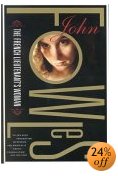
The French Lieutenant's Woman - John Fowles [March/06]


I read this book for one of my classes at university. It is a rather long novel, which is not always that bad, but it it also one of those books that you feel could have ended long before it actually does. John Fowles passed away last year, but during his lifetime wrote many novels that are loved by many and studied in classrooms around the world. The French Lieutenant's Woman is a highly researched novel in order to be able to better reward the reader with a sense of what life was like in Victorian England. An Englander himself, Fowles seemed to want to bring to his readers a sense of what his life was like several years before.

The novel starts out with a lovely new couple on the days leading to their marriage. Tina and Charles met at a party and after a courtship got engaged. Tina is the prized only child of a upper middle class family while Charles is a man that had decided that it is about time that he settled down. Tina is rather naive throughout the novel, you can tell she lived a rather sheltered life, while Charles spends the novel wishing for something other than he has and telling the readers that he is not ready for marriage. In the very early pages of the novel we are introduced to The French Lieutenant's Woman. A young woman, named Sarah, who was believed to have fallen in love with a young lieutenant and walked the docks awaiting his return. Charles' is the only one that she tells the truth, or what she says is the truth, to later in the novel.

This may seem confusing, what is Charles' doing with another woman, but their paths cross in the early pages of the novel and continue to. She finds in Charles' someone to express her sins to, and he finds in her his ticket out of a marriage that the reader knew was not meant to happen. Fowles follows this love triangle, we have Tina unaware that anything is going on until she is told, Sarah who seems to want something out of someone elses lover, and Charles' who seems to always want the one thing he can never have. Fowles also uses this novel to express to the reader what it was to be a gentleman in Victiorian England by having Charles have discussions with himself over the correct behaviour for a man in his situation and also by a narrator that offers his opinion of the novel at every oppurtunity.

This book is different than you might consider a romance novel. The narrator tells you what to think about the situation and instead of a clear chain of events, you are often left with choices as to how things should play out. It is an interesting novel, but not very engaging.

3/5

Sunday, April 02, 2006

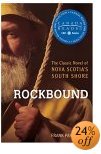
Rockbound - Frank Parker - Day [February/06]


This novel is considered a classic in Canada. I had to read it for my Atlantic Canadian Literature class, and I thought I would like it, but I am sad to say I found it really dull! So dull, I am not really sure what I am going to say about it. It takes place on South Shore Nova Scotia, and actually when the author retired he moved to very near to where I was brought up. That is sort of interesting. Anyways, the book was written in the 19oo's and then vanished for a very long time, only to resurface in the last few years when another Canadian author nominated it for an award. It won, and the book has been around ever since.

I know that it is supposed to be a great work, and I know many people that have loved it, but I just found it monotonous with every other book set in the Maritimes. We are often associated with fishing, and fishing is what this book is about. It is really all the book is about, and I can generally handle that, so I wonder if my dislike of the book was based on the books I read around it. I mean, the book I read just before it was Good Omens, which I adored, so that would make a book about fishing look sort of dull in comparison. So, I intend to read it again when I read a more subdued book and maybe I will see what all the hype is about.

2.5/5